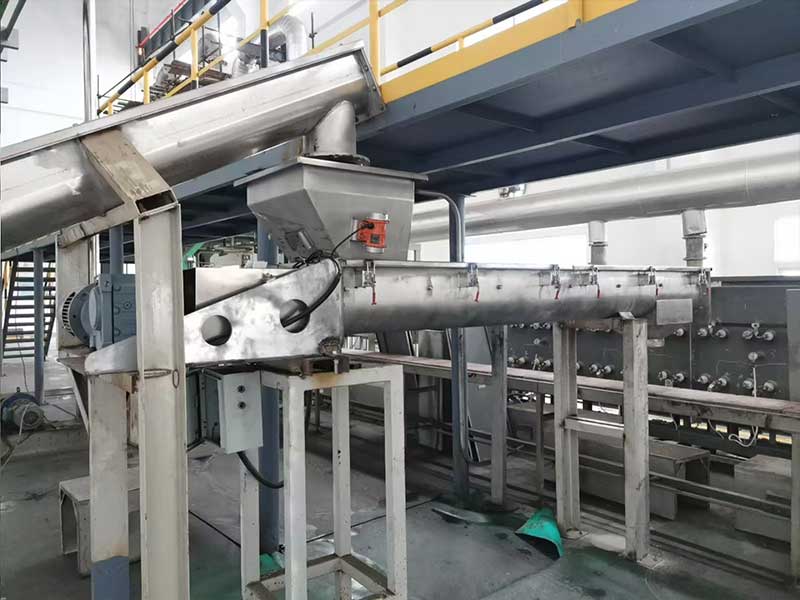
Situation
The sludge conveying section of a municipal wastewater treatment plant originally utilized standard carbon steel single-shaftless screw conveyors. These conveyors were in prolonged contact with highly saline, corrosive sludge and wastewater containing solid particles. The equipment exhibited severe operational flaws: the poor corrosion resistance of standard carbon steel led to frequent shaft rusting, shell perforations, and blade wear or breakage. Furthermore, the single-spiral structure had insufficient conveying capacity, causing frequent sludge accumulation, arching, and blockages.
The equipment required shutdowns for maintenance, welding repairs, and part replacements every 3 to 6 months. This resulted in high operational and maintenance costs and disrupted the continuous processing capacity of the wastewater treatment plant. Additionally, rust and impurities falling from the aging equipment caused secondary pollution, failing to meet stringent environmental disposal standards and long-term operational requirements. An urgent equipment upgrade was needed.
Task
The core objectives of this sludge conveying system upgrade were:
Replace the aging carbon steel equipment with a complete 316 stainless steel configuration to (thoroughly) resolve corrosion and rusting issues.
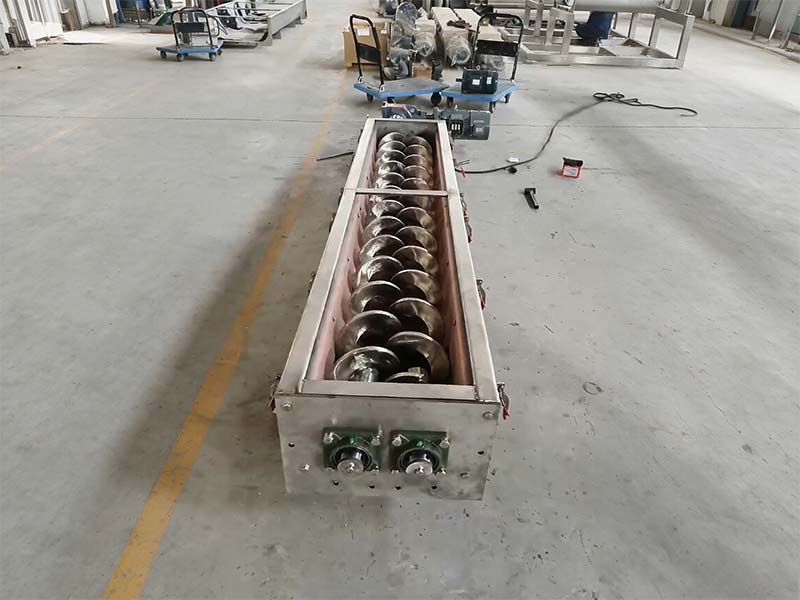
Adopt a dual-shaftless spiral structure to increase sludge conveying capacity, prevent blockages, and resist tangling, adapting to high-viscosity, high-impurity sludge conditions.
Complete equipment selection, parameter verification, material confirmation, and installation/commissioning to achieve long-term maintenance-free and continuous stable operation, thereby reducing the failure rate and maintenance costs.
Action
Precise Material Selection Based on Operating Conditions:
Considering the high chloride ion content, acid/alkali corrosion, and high salinity of the sludge, we implemented a full 316 stainless steel solution. This covered all contact components, including spiral blades, conveying shells, end shafts, inlet/outlet ports, and bearing housings. The superior acid, alkali, salt spray, and wastewater corrosion resistance of 316 stainless steel perfectly adapted to the harsh media environment of wastewater treatment.
Structural Optimization: Dual-Shaftless Spiral Configuration:
We abandoned the traditional single-spiral structure in favor of a dual-shaftless synchronous conveying design. The centerless structure completely eliminated the risk of sludge and fibrous debris tangling and jamming. The counter-rotating dual spirals provided forced pushing and arch-breaking capabilities, significantly resolving the pain points of blockages and accumulation in high-viscosity sludge conveying while increasing the throughput per unit of time.
Parameter Matching and Customization:
Based on the on-site sludge moisture content, conveying distance, inclination angle, and processing volume, we precisely calculated the dual-spiral rotation speed, trough dimensions, motor power, and sealing structure. We equipped the system with waterproof, dustproof, and leak-proof sealing components to accommodate 24/7 continuous operation. Additionally, the equipment support and vibration-damping structures were optimized to suit the plant's vibration and humid operating environment.
Result
Corrosion Issue Completely Resolved: The full 316 stainless steel configuration perfectly adapted to the high-salt corrosive environment. The equipment experienced no rusting, perforations, or blade wear/aging, extending the service life from half a year to over 5 years.
Significantly Improved Conveying Stability: The dual-shaftless spiral structure completely eliminated sludge tangling, arching, and blockages. The equipment achieved 24/7 continuous and stable operation, with the failure-related downtime rate dropping by over 95%.
Significant Cost Reduction and Efficiency Gains: Maintenance, part replacement, and labor costs associated with downtime were drastically reduced. The elimination of frequent shutdowns for maintenance ensured continuous production capacity for the wastewater treatment line and mitigated environmental risks caused by sludge accumulation.
Regulatory Compliance: The equipment operated without causing secondary pollution. Its conveying efficiency and adaptability to operating conditions fully met the environmental and production standards for municipal wastewater treatment, successfully accomplishing the equipment upgrade goals.