Situation
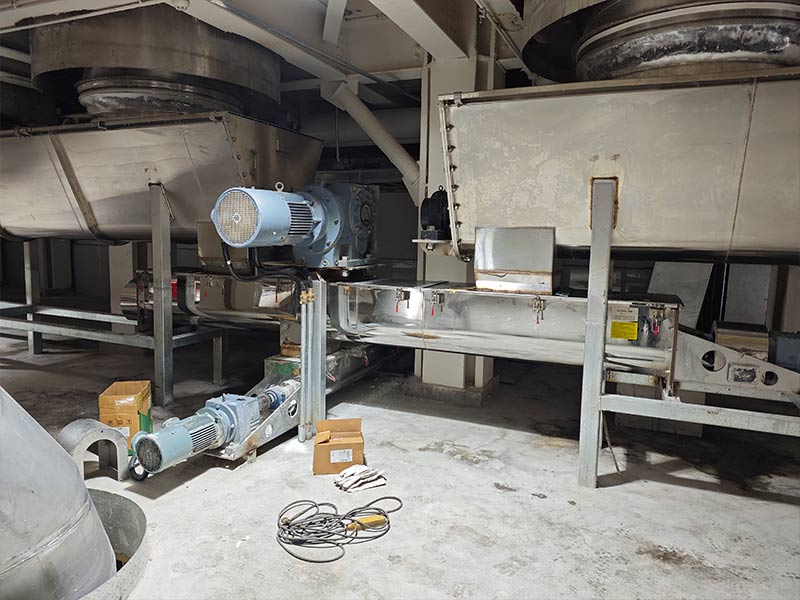
The client is a mid-sized domestic manufacturer of lithium battery cathode materials, specializing in the processing of lithium iron phosphate (LFP) powder with an annual output of over 12,000 tons. Due to the fine particle size, high moisture content, and strong adhesion of the LFP powder, the entire production line relies on enclosed screw conveyors for raw material transfer. Powder conveying is the core link in ensuring continuous production.
Challenge
During operation, the original standard 304 stainless steel screw conveyors frequently experienced arching and bridging inside the barrel. The powder would solidify into columnar lumps, causing severe blockages and material flow interruptions. Specific issues included:
Frequent Downtime: Blockages required cleaning 4 to 6 times daily, with each clearing taking 60 minutes.
High Friction: The standard inner barrel wall had high friction, leading to severe powder adhesion and accumulation.
Insufficient Torque: The original reducer lacked adequate torque, causing overload trips once lumps formed.
Structural Deformation: The shaft and blades were too thin and frequently deformed due to extrusion from hard lumps.
Poor Sealing: Inadequate sealing caused powder leakage, exceeding workshop dust limits and increasing raw material loss.
Core Objective: Completely eliminate powder bridging and blockages, reduce downtime, minimize raw material loss, and extend equipment lifespan.
Action
To address the lumping and blockage pain points specific to LFP powder, we customized a brand-new screw conveyor with comprehensive upgrades:
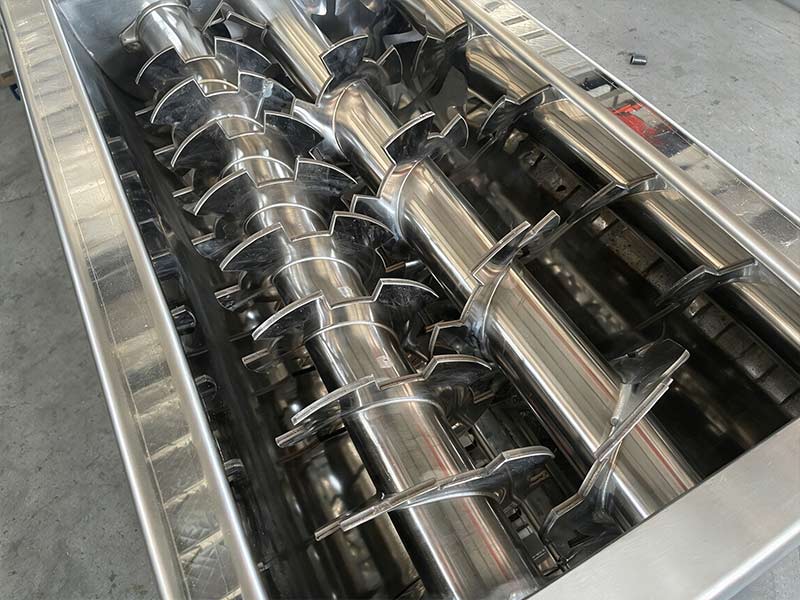
Barrel Material Upgrade: Replaced the inner barrel with mirror-polished 304 stainless steel to reduce powder adhesion and prevent wall accumulation.
Power System Reinforcement: Upgraded to a larger reducer model to increase overall output torque, providing sufficient power reserves to break up lumps.
Dedicated Anti-Arching Mechanism: Installed an internal dispersing and arch-breaking device to actively shatter columnar arches at the source.
Structural Reinforcement: Increased the thickness of the main shaft and conveying blades to enhance resistance to extrusion and impact.
Sealing Optimization: Added high-pressure gas sealing structures at both ends to completely block the outward leakage of fine LFP powder.
Result
After the upgraded equipment was commissioned, the improvements were highly quantifiable:
Zero Blockages: Powder arching and blockage-related downtime dropped from 4-6 times daily to zero, saving 1,200 minutes of manual cleaning labor per month.
Minimal Adhesion: Powder accumulation on the inner barrel wall was reduced by 92%, eliminating the need for manual wiping and cleaning.
Significant Cost Savings: Raw material dust leakage and loss decreased by 96%, saving ¥13,800 in powder raw material costs monthly.
Enhanced Durability: Shaft and blade deformation failures dropped by 100%, and annual maintenance frequency was reduced by 85%.
Increased Capacity: Effective continuous conveying runtime increased by 32%, synchronously boosting the overall capacity of the LFP powder production line by 32%.